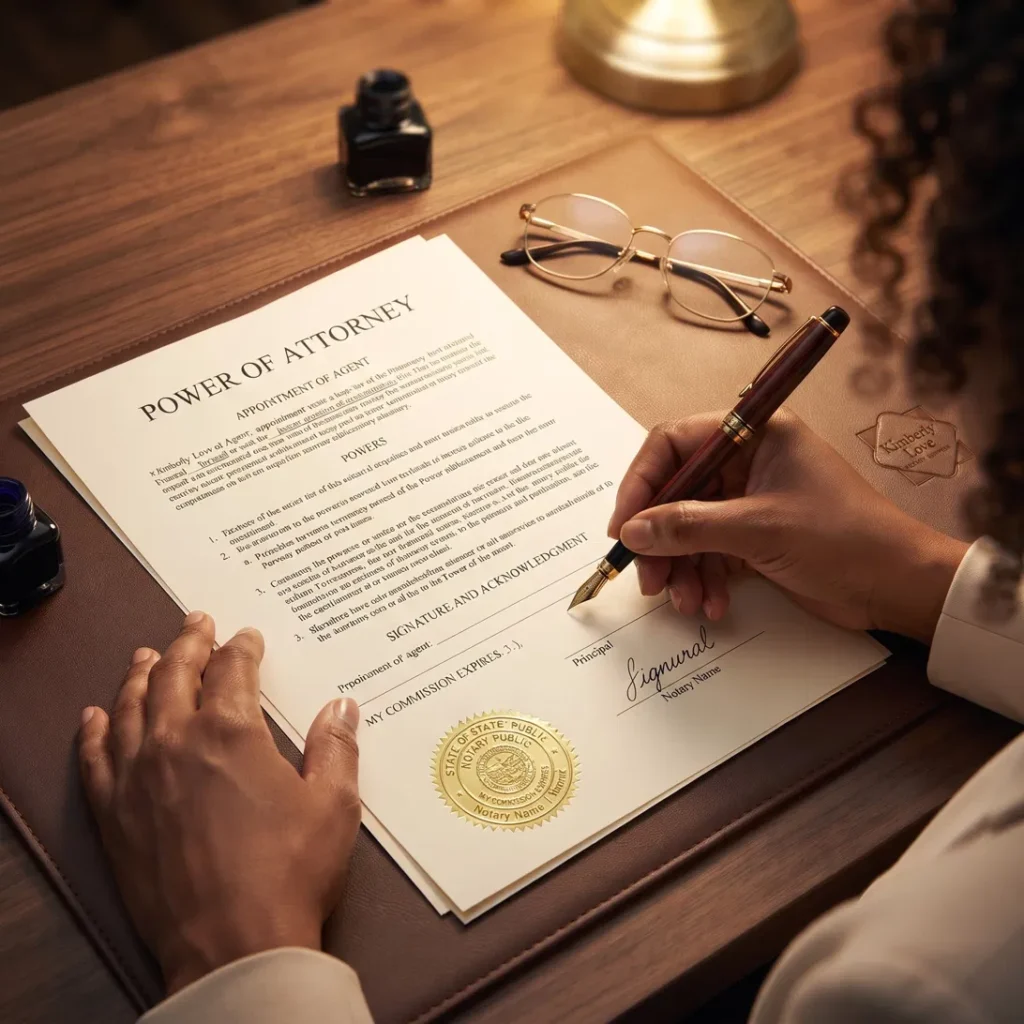
Nobody plans for the day they can’t make their own decisions, or the day they simply can’t be in two places at once. That’s exactly why a Power of Attorney (POA) exists. It’s one of the most useful legal documents you can have, and one of the most misunderstood.
What Is a Power of Attorney?
A Power of Attorney is a legal document that lets you (the principal) give someone you trust (your agent, sometimes called an attorney-in-fact) the authority to act on your behalf. Your agent doesn’t have to be a lawyer. They just need to be someone you trust completely.
Common Types of POA
- General POA: Broad authority over financial and legal matters, such as banking, paying bills, and handling property.
- Durable POA: Stays in effect even if you become incapacitated. This is the one most families need.
- Limited (Special) POA: Authority for one specific purpose, like signing a real estate closing while you’re out of town.
- Medical (Healthcare) POA: Lets your agent make medical decisions if you can’t speak for yourself.
When Do People Use a POA?
- Aging parents who want a trusted child to manage their affairs
- Military families and travelers who can’t be present to sign documents
- Real estate closings when one party can’t attend
- Planning ahead for illness, surgery, or unexpected emergencies
Why Does a POA Need to Be Notarized?
A POA hands someone real power over your money, property, or health decisions. Banks, courts, title companies, and medical providers need confidence that the document is genuine. Notarization provides that:
- Identity is verified. A notary confirms the signer is who they say they are, using valid government-issued ID.
- Willingness is confirmed. The notary makes sure you’re signing voluntarily, not under pressure.
- Awareness is observed. The notary watches for signs that the signer understands what they’re signing.
- Acceptance is far more likely. Many banks, title companies, and county offices require a notarized POA, and a real estate POA generally must be notarized to be recorded.
An un-notarized POA can be rejected at the worst possible moment, like the day of a closing or a medical emergency.
What a Notary Can and Can’t Do
A notary public is an impartial witness to your signature. Notaries cannot give legal advice, choose the right type of POA for you, or draft the document. For that, talk to an attorney or use a trusted legal form provider. Once your document is ready, we make sure it’s signed and notarized properly. (Requirements can vary by document and situation, so confirm with your attorney or the receiving institution.)
Before Your Notary Appointment
- Bring a valid, unexpired government-issued photo ID
- Do NOT sign the document beforehand. You sign in front of the notary.
- Make sure all names and details are filled in
- Have your agent’s information ready, if needed
Need a POA Notarized? I Come to You.
I’m Kimberly Love, mobile notary serving Clarksville, Nashville, Murfreesboro, and surrounding communities. I’ll meet you at your home, office, hospital, or anywhere convenient, so you’re not scrambling when it matters most.
Disclaimer: This post is for general information only and is not legal advice. Please consult a licensed attorney about your specific situation.